|
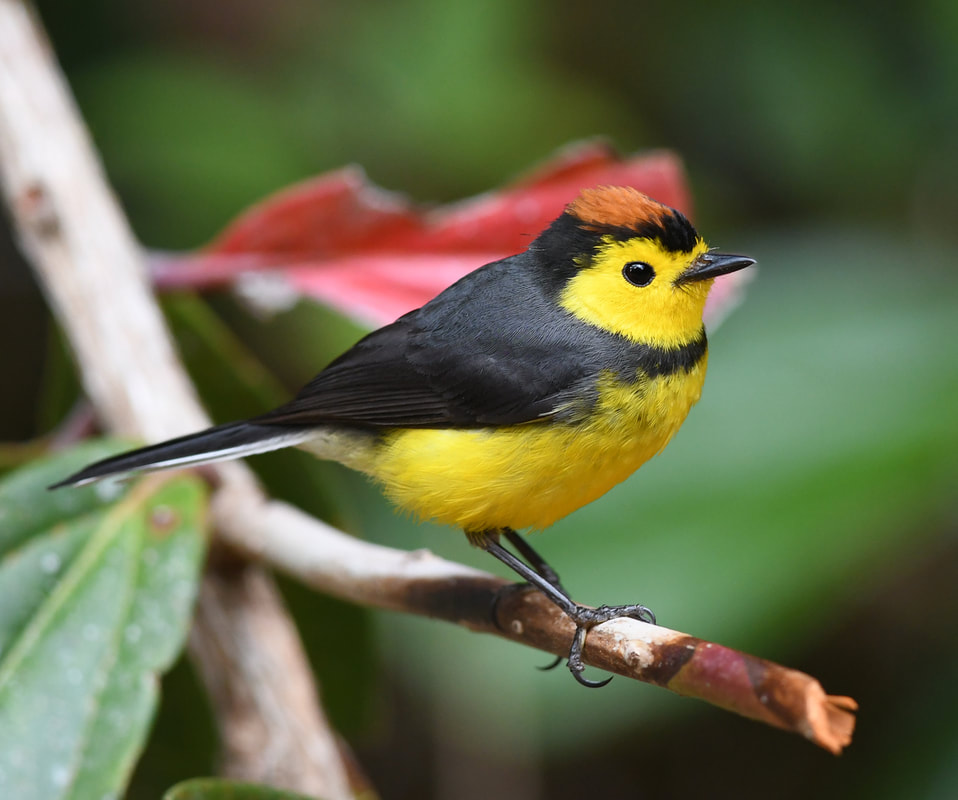
We left Colombia behind and flew to San José, Costa Rica for the next leg of our adventure. Neither Laura nor I had visited this country before but we had grand plans. Costa Rica is obviously much smaller in area than Colombia and so less time is needed to cover off the country to the same degree; I expected that six weeks would be sufficient for this trip. Of course, one could spend a lifetime in a country as diverse as Costa Rica and still miss out on significant portions of its natural history. But we had budgeted 2-2.5 years to travel throughout the Americas and so six weeks would do, this time. By mid-April, I had plans to travel to Canada for a couple of days and then to Spain, where I had a tour scheduled for Quest. Laura, meanwhile, would stay in Costa Rica for a few additional weeks and volunteer her time at a wildlife rehabilitation clinic. Of course, you know what they say about best laid plans. Who could have foreseen a global pandemic shuttering the trip? Fortunately, Laura and I still got in three weeks of travel before we had to evacuate, and we made the most of our time in Costa Rica. Laura and I rented a car from the airport on February 29 and headed for the mountains south of the city. We had booked a room at a budget lodge called Retiro el Sanctuario, which was located just down the road from the famous Paraiso El Quetzales lodge. For a fraction of the price we were able to enjoy the same forest (and resulting birds!). Having never visited the Talamanca range of Costa Rica and western Panama, many of the common birds here were lifers for us. Some highlights here include the homemade meals made by the family who runs the lodge, sipping red wine by a crackling fire during the cool evenings, seeking out Dusky Nightjars after dusk, and mixed flock pandemonium during birdy mornings. And of course, the Resplendent Quetzals were, well, resplendent. We explored some nearby areas while staying at Retiro el Sanctuario. The high elevation radio towers at Cerro Buenavista provided nice looks at Volcano Juncos and Timberline Wrens, though we “dipped” on Peg-billed Finch (this time). We also birded along the “KM 76 Providencia Road” in nearby Parque National Los Quetzales. This was definitely a good call since the road covers a large altitudinal gradient through beautiful oak and chestnut forest. Tourists seem to avoid this area (at least, in our limited experience) and the birdlife was excellent! Laura and I left the mountains behind and pointed our car towards the steamy lowlands of the Osa Peninsula. We hiked in all of our food and gear to a remote backpacker hostel called the Bolita Rainforest Hostel. The price was right and the location could not have been better! For three days and nights this was our home. Dozens of kilometres of trails snake through primary and secondary forest. Speaking of snakes, we lucked out with quite a few sightings and we found every possible target bird as well. Turquoise and Yellow-billed Cotinga, White-crested Coquette, Black-cheeked Ant-Tanager and Orange-collared Manakin were some of our favourite bird species from the Osa Peninsula. For the rest of our time with the rental car, Laura and I visited several other sites in the mountainous regions surrounding San José. One problem we discovered was that it was really difficult to properly explore many of the beautiful national parks in Costa Rica. This was because of two reasons: the very high entrance fees, and the late opening hours. Quite a few of the national parks do not even open until 8 AM when the peak of the morning’s bird activity is safely in the rear-view mirror! We weren’t in Colombia anymore, that’s for sure. Luckily, on a few occasions we were able to arrange early morning access by asking the forest rangers ahead of time. At Parque National Tapantí, we enjoyed the solitude of the misty forest before the tourists arrived. Tantalizing bird species included Sooy-faced Finch, Costa Rican Warbler, all three mountain-gems, Chiriqui Quail-Dove and a family of American Dippers, with a backdrop of Prong-billed Barbets “singing” behind us. The following day in Parque National Braulio Carrillo we spent hours walking a short loop because the birding was so good. We found an attractive Lower-montane Green Racer, a somewhat uncommon snake. Bird highlights included many Lattice-tailed Trogons, a large antswarm attended by many species, flyover Red-fronted Parrotlets, a large mixed flock led by some White-throated Shrike-Tanagers, a relatively tame Olive-backed Quail-Dove, and a Snowcap. The nearby Reserva El Tapir hummingbird gardens produced photogenic hummers including a Black-crested Coquette. For our last two nights with the rental car, Laura and I based ourselves in the Arenal area. We mostly avoided the main touristy areas (other than a very productive afternoon at Sendero Bogarín) and managed quite a few nice sightings. One morning, we drove south for about an hour and explored the entrance road leading to Reserva Alberto Manuel Brenes. Despite having to dodge the occasional rain showers, we had an awesome day surrounded by forest and wildlife. This was another day where we hit the 100 bird species mark, highlighted by a massive mixed flock that included some rare Blue-and-gold Tanagers. Another excellent morning occurred at the "Peninsula Road (shortcut to dam)" as it is titled on eBird. The overcast weather prolonged the morning's bird activity again. I was very excited to spot my first Keel-billed Motmots, while an ant swarm kept us entertained as various antbirds, leaftossers, schiffornises, and woodcreepers took part in the feast. Laura and I did not realize it at the time, but we were entering our last ten days of exploration before the pandemic forced us to head back to Canada. We returned to San José and met my parents at the airport. They were anticipating a relaxing week in Costa Rica with us over March Break, filled with nature exploration and some beach time. Of course, there were some stressful moments brought on by the pandemic as we tried to figure out what our best course of action was. In the end, they did not change their return ticket and Laura and I booked tickets home on the same flight. Fortunately, we were still able to complete our itinerary with them and had a fantastic trip given the circumstances. For three nights we based ourselves in the La Selva area of the Caribbean Lowlands. This is one of the most popular locations for naturalists to visit, and for good reason! Endless high-quality trails traverse the primary and secondary forests of the biological reserve. Regardless of your natural history interest, there is something for you at La Selva: Semiplumbeous Hawks and Snowy Cotingas perching beside the lazy Río Puerto Viejo, three species of tinamous calling from somewhere in the dark understory, vibrant Strawberry Dart Frogs littering the forest floor, the drone of cicadas during early afternoon siestas, a tapestry of flitting butterflies in the verdant forests. From La Selva we crossed over the continental divide and based ourselves along the dry Pacific coast for a few nights; first, in the Jaco area and next, in the foothills not far from Quepos at a secluded AirBnB property. We made full use of the sunny, picturesque beaches along the Pacific coast while also taking the time to enjoy the wildlife and the beauty of the area. I took advantage of the opportunity to set up my moth sheet as well. We finished off the trip by visiting a few locations in the highlands of Costa Rica not far from San José. First, we explored Parque National Los Quetzales for a few days. Laura and I had just been to some of these areas a few weeks earlier, but we were more than happy to return (and encounter some of the birds we had missed earlier like Ochraceous Pewee, Peg-billed Finch and Sulphur-winged Parakeet!). One memorable day was spent hiking in the beautiful oak forests in the hills above the Savegre Hotel. The forest was incredibly peaceful, the birding was excellent with some nice mixed flocks, and my mom made a great find by discovering a rare silkmoth called Antheraea godmani. For our final day in Costa Rica we returned to the Orosi area near Parque National Tapantí. We soaked in the beauty of the area and tried to savour every moment, knowing that our trip was quickly coming to an end. Despite the stress of the pandemic during this last week of our trip, I think that we maximized our time and I am grateful that we managed to share the experiences with my parents. And so ends Part 2 of my year in review. The remaining few posts will be a little less interesting as they will document my time spent in Ontario for the last nine months of the year, but there were still a few highlights here and there!
0 Comments
Leave a Reply. |
Archives
February 2026
|
RSS Feed