|
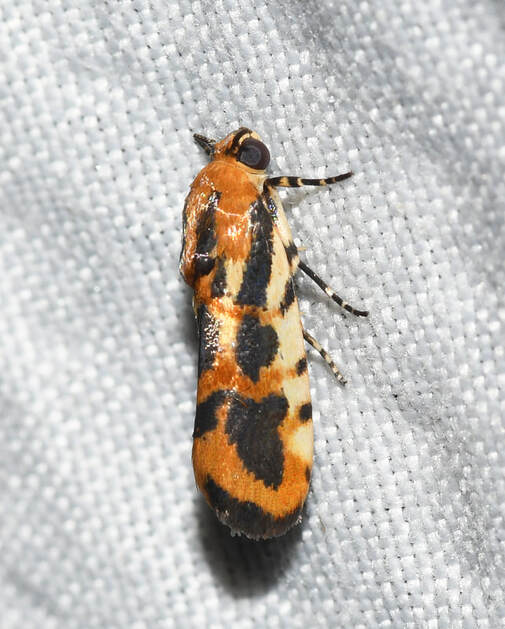
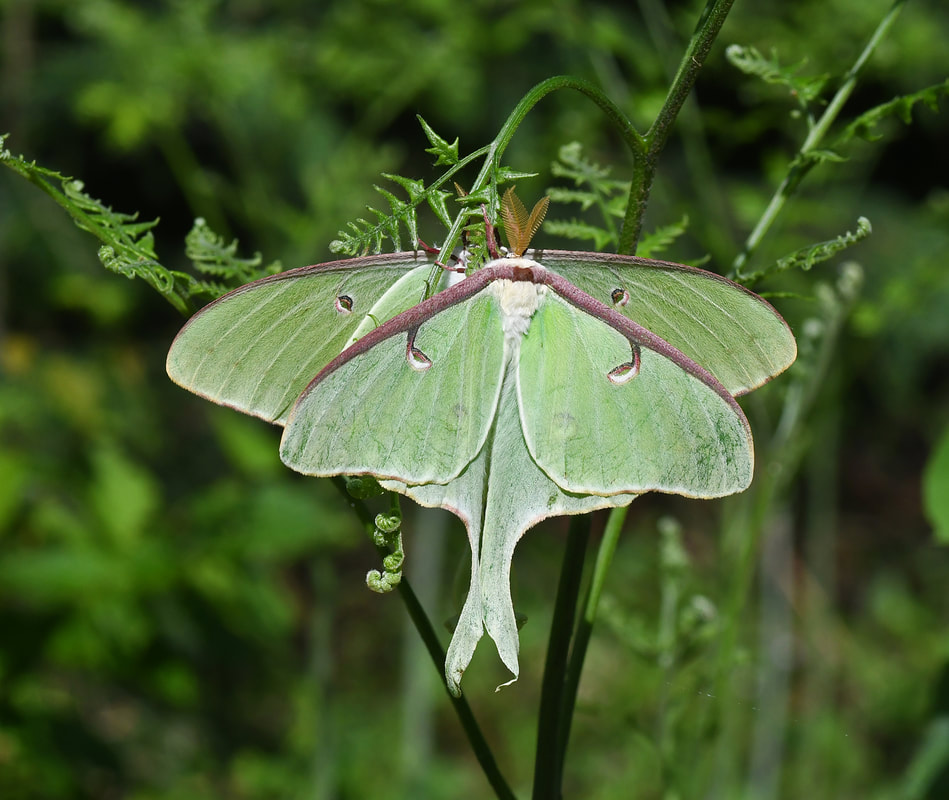
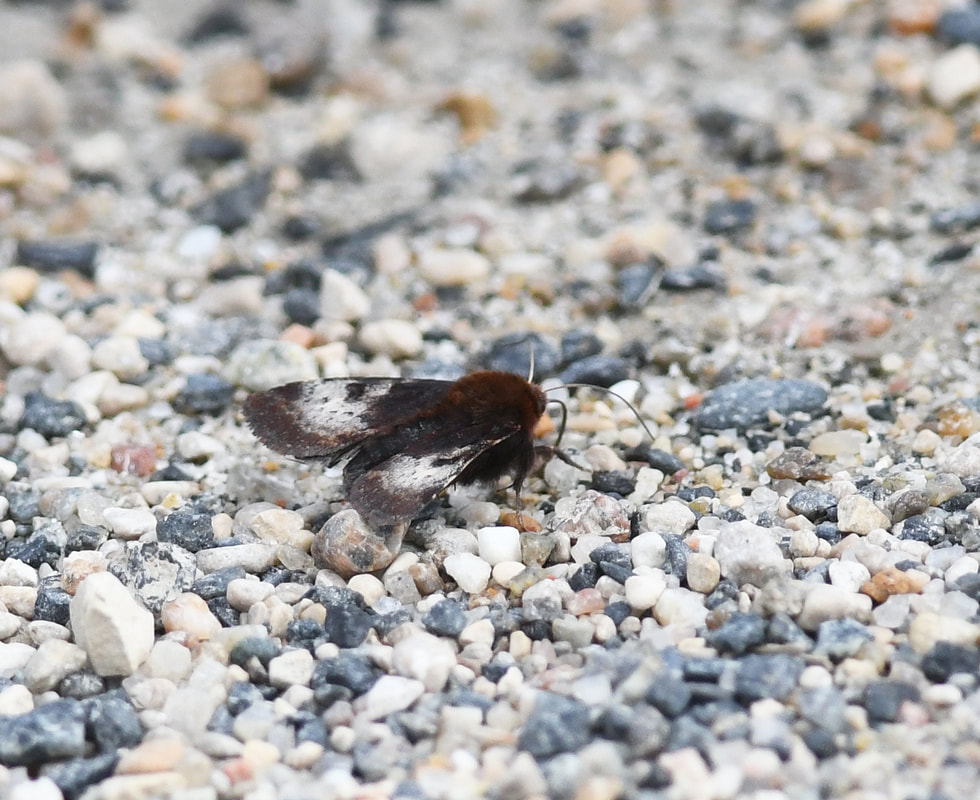
My interest in moths really took off in 2020 due to a confluence of factors. In July 2019 I purchased a lightweight moth light, called a LepiLED, that uses little energy and can be operated with a small powerbank. We had brought this with us to South America and used it regularly, quickly getting addicted to Neotropical moths in the process. This interest carried over into 2020. While Ontario does not have nearly the same diversity as Ecuador, Costa Rica or Colombia, mothing here can still blow your mind. The Ontario list is over 3300 species with many more still to be added. Mothing is an activity that can be done anywhere, even in a suburban backyard. I’m all for naturalizing opportunities that can be done in your backyard with a beer in hand! Because of the impressive diversity here in Ontario, rarely did an evening pass without a few novel species appearing. Moths are not the only taxa that appear at the sheet. Beetles, flies, arachnids, orthopterans, caddisflies and much, much, MUCH more will also show up to the party. With the aid of a macro lens, one can enter this incredibly vast, diverse world. For every hour at my moth sheet, I probably spent between 3 and 10 hours poring through internet resources and field guides to learn about various species and their life histories. If only I had the mental capacity to remember everything! There are numerous ways to search for moths. My primary method was the use of my LepiLED and a white sheet, mainly because this is what I had at my disposal. The advantage of the LepiLED is its portability, due to limited power requirements. But there are other light sources that can be used, some of which draw in more species. These include the use of mercury vapor bulbs or blacklights, to name just two. Many others prefer setting up traps; essentially, a light above a pail with a funnel, which guides the moths inside where they take refuge in egg cartons. Then, the intrepid moth-er can pick through them the next morning at their leisure. This is a technique I would like to practice in the future. Painting the trunks of trees with a fermented sugar mixture – a technique called sugaring – is a productive way to search for a different subset of species. Quite a few moth-ers sugar for underwing moths (Catocala spp.), but it can produce an array of other moth and invertebrate species. And finally, seeking out flowers at night will often produce a surprising diversity. Moths are said to be the secret pollinators since most of their work is completed at night. Like butterflies, many moth species will ingest nectar. For example, goldenrod or joe pye weed patches in the late summer and early fall are usually filled with moths, beetles and other insects. During the summer of 2020, I usually set up my moth sheet 3-5 times a week. Most of my mothing was completed in two regions where I resided for much of 2020 – the Cambridge area until mid-August, and St. Catharine’s from mid-August through October. Several trips to northern and central Ontario padded my species list, as did a few excursions to Norfolk and Essex Counties. When it was all said and done, I photographed 1,022 species of moths in Ontario in 2020, as well as several others that have not been identified down to species. Photographing 1000 species was a goal of mine which I finally completed in late September. I did not begin until early June, so 1200 would have been doable if I had mothed during the spring. To give you an example of the impressive diversity in southern Ontario, I will highlight certain locations and the species total in relatively few nights of searching. -Sudden Tract in North Dumfries Township, Waterloo Region: 409 species in 10 visits -Dickson Wilderness Area in North Dumfries Township, Waterloo Region: 205 species in 4 visits -Short Hills Provincial Park, Niagara Region: 237 species in 9 visits -Manester Tract, St. Williams, Norfolk County: 332 species in 4 visits -my parents’ yard in suburban Cambridge, Waterloo Region: 275 species throughout the summer One exciting aspect of mothing is that relatively few people study them compared to birds, herps, or plants, for example. Therefore, it is easy to come up with exciting discoveries - even in your backyard. The meadow behind my parents house is a little green oasis surrounded by subdivisions. It is mainly vegetated by invasive species, but even here, surprises can be found. This next species of crambid moth, which showed up on August 12, had been recorded less than five times previously in Ontario, for example. Below are some of the rarest species I noted in 2020. A decent night of mothing at Short Hills Provincial Park on August 25 provided numerous interesting species. The rarest of the night did not land on the sheet; instead, it was nectaring on some Joe Pye Weed up the path. It is a crambid moth known as the Falcate Sericoplaga (Sericoplaga externalis), and represents the first record for Canada. This is a species whose caterpillars feed on Osage Orange, a southern tree which is a relatively common planted species in Niagara Region. This is a species of twirler moth called Chionodes sevir, as identified by Paul Dennehy. As far as I have been able to discern this is the first record of the species for Canada. I photographed it at Brunet Park in Windsor on August 21, 2020. This next species is called the Planthopper Parasite Moth (Fulgoraecia exigua), and prior to 2020 it was unknown for Canada. A friend of mine, Geoff Pekor, noted the distinctive larvae earlier in August, 2020 feeding on a planthopper. This is pretty unusual behaviour for a lepidoptera species! The first adult noted for Canada was this individual, which Baz Conlin and I discovered early in the morning on August 22 (the night of Aug 21-22 was quite productive). Subsequently, several other adults were found by others, including Geoff Pekor and Tom Preney, later in the summer. Sudden Tract in North Dumfries Township, Waterloo Region is only a ten minute drive from my parents' house in Cambridge. This is where I was based for most of the spring and summer and so I set up my moth sheet on ten occasions at Sudden Tract. Quite a few of my rarest moths were found here. This is a testament to the high quality Carolinian forest found on the site. One of the most memorable was a type of underwing moth called the Graceful Underwing (Catocala gracilis). Underwing moths are highly sought after by many moth-ers, and this is a rare one for Canada with only a few other records. On July 27th I set up my sheet at Short Hills Provincial Park and experienced a very lucky sighting. A Honey Locust Moth (Syssphinx bicolor), appeared at my sheet. This is a type of silkmoth, being related to the Luna Moth, Polyphemus Moth, Cecropia Moth and the like. As its name implies, the caterpillars of this species feed on Honey Locust. According to the Ontario moth atlas, the only other report for Niagara Region was 50 years ago, while recent Ontario sightings have taken place at Point Pelee National Park (2008) and Pelee Island (2001). One of my favourite sightings of 2020 was this little known twirler moth called Aristotelia primipilana from St. William's in Norfolk County. Few photos of live individuals exist, and it is currently only known from Ontario and Florida - a remarkably disjunct range. Is it more widespread but undetected, or are these two different species? There remains much to discover with micro-moths. Another relatively unknown moth - Lobesia spiraeae. Few records for Ontario exist for this species, yet I noted it at two locations within the span of a week close to Cambridge: FWR Dickson Wilderness Area and Sudden Tract. I would not be surprised if a short flight period is cause for its apparent rarity. St. William's provided numerous rare moths. This hickory-feeding species has only a couple of previous records for Canada, despite frequent searching in the Long Point area. In addition to Norfolk, there are historic records from Lambton County as well. Staying out late payed off on a few occasions. During my first visit to St. Williams on July 10-11, I was about to pack it in around 3:30 AM when I noticed this beauty on the sheet. The quite rare in Ontario, Pink Prominent (Hyparpax aurora). What a night-cap! Below, I have listed the Ontario moth families and have indicated how many species I photographed from that family in 2020. I have added a few representative photos of my favourite species. Hepialidae – Swift Moths 2 species Nepticulidae – Pygmy Moths 2 species Psychidae – Bagworm Moths 2 species Tineidae – Fungus and Clothes Moths 10 species Bucculatricidae – Ribbed Cocoon-Making Moths 4 species Gracillariidae – Leafblotch Miner Moths 31 species This next species, a species which feeds on blueberries (Vaccinium sp.) has few records from Canada. This summer, I found several individuals in the St. Williams area of Norfolk County. Unfortunately, my photos turned out rather poor but David Beadle managed much better ones a few days later. Yponomeutidae – Ermine Moths 4 species Plutellidae – Diamondback Moths 1 species Glyphipterigidae – Sedge Moths 3 species Argyresthiidae – Shiny Headstand Moths 3 species A well named family of micro-moths! Attevidae – Tropical Ermine Moths 1 species Autostichidae – Autostichid Moths 3 species Oecophoridae – Concealer Moths 3 species Depressariidae – Flat-bodied Moths 13 species Despite belonging to this family, these bird-dropping mimics do not exact exhibit the "flat body" expected of them... Cosmopterigidae – Cosmet Moths 6 species Gelechiidae – Twirler Moths 50 species This next family of moths is impressively diverse and will likely undergo considerable taxonomic revision in the future. Like all of the moth families exhibited so far, they are a type of micro-moth (my favourite). It is much easier to find significant records, such as new country records, if you focus on the micros. Many individuals have to be left at the genus level due to difficulties in their identification. This species is called the Lupine Leafroller Moth (Anacampsis lupinella). Its larvae feed on the leaves of Sundial Lupine and in Ontario it is only known from three locations. In mid-July I noted dozens from St. Williams in Norfolk County! Elachistidae – Grass Miner Moths 3 species Coleophoridae – Casebearer Moths 5 species Blastobasidae – Blastobasid Moths 3 species Momphidae – Mompha Moths 3 species Pterophoridae – Plume Moths 11 species Carposinidae – Fruitworm Moths 2 species Schreckensteiniidae – Bristle-legged Moths 1 species Galacticidae – Galacticid Moths 1 species Tortricidae – Bell and Leafroller Moths 176 species This is another incredibly diverse family of moths in Ontario. Many species are leafrollers, named for the characteristic behaviour of the larvae. Quite a few are host-specific, but there are a number of widespread species that will utilize a variety of plant species. I was fortunate to come across a number of rare or poorly known species during 2020. This is often not a function of their true status, but simply because fewer people are seeking them out. This species was noted near Marten River in Nipissing District on September 25, representing one of the few Ontario records. Cydia ingrata is another rare and poorly known species. I have been unable to find other photos of live individuals yet. Too bad I botched the photos... A common moth, but an attractive and an incredibly variable one: the Tufted Apple Bud Moth (Platynota idaeusalis). Cossidae – Carpenter and Leopard Moths 1 species Sesiidae – Clearwing Moths 1 species Limacodidae – Slug Caterpillar Moths 12 species An interesting family, where the caterpillars are often more captivating than the adults. This particular species, Acharia stimulea, barely ranges into southwestern Ontario. Zygaenidae – Burnet Moths 1 species Pyralidae – Pyralid Snouth Moths 48 species Crambidae – Snout and Grass Moths 99 species Some of the more unusual moths that I photographed this year were members of Crambidae, especially a few northern species which are rarely photographed due to the remoteness of their preferred habitats. Many are small and brownish, such as this grass-veneer known as Crambus alienellus, and a pearl moth known as Udea inquinatalis. Not all crambid moths are drab, however. Drepanidae – Lutestring and Hooktip Moths 6 species Lasiocampidae – Tent Caterpillar and Lappet Moths 5 species Apatelodidae 1 species Saturniidae – Giant Silkworm Moths 9 species These are the big fancy moths; the species that are most responsible in sparking a young naturalist's interests in moths. By far the rarest silkworm I discovered was the Honey Locust Moth, mentioned earlier in this post, but I had a good year with the others. Mating Luna Moths in the boreal forest, almost a dozen Imperial Moths in one night, and my first Columbia Silkmoths were other memorable highlights in 2020. Sphingidae – Sphinx Moths 19 species Continuing the theme of large, flashy moths, next up are the sphinx moths. Some of these are day-flying moths, including the well known hummingbird clearwing moths. Most of the nocturnal species readily appear at the sheet. In southern Ontario most sphinx moths are uncommon at best, but a night of mothing in the boreal forest in June can produce dozens of them! While not the most flashy, this Pawpaw Sphinx from Sudden Tract was one of my favourites. Uraniidae – Swallowtail Moths 2 species Geometridae – Geometer Moths 114 species This is another massive family of moths widespread throughout the world. A rare immigrant from the south: the Dwarf Tawny Wave (Cyclophora nanaria) from Short Hills Provincial Park in Niagara Region. Notodontidae – Prominent Moths 34 species Erebidae – Tiger, Tussock and Underwing Moths 142 species We are approaching the end of this blog post, with just a few families remaining. Hang in there! Up next is the diverse family of Erebidae. Quite a few popular moths are included here, many which vary wildly in shape, colour, and pattern. Indeed, if I had to make a list of my top 20 Ontario moths, a large percentage would probably be from Erebidae. It was terribly difficult to narrow down my photos to just a few. Euteliidae – Euteliid Moths 2 species Nolidae – Tufted Moths 9 species Noctuidae – Owlet Moths 171 species This is the final family of moths and indeed, it is the most speciose out of any family in Ontario. A trip to Cochrane District and back produced many highlights including these two noctuid moths. Neither are reported very often, especially in Ontario, presumably due to their northern distribution. I will conclude with two species of flower moths, a genus that includes many bright-coloured species that can sometimes be found nectaring on their preferred flowers. And so ends Part 4 of my year end summary. If you somehow made it through this entire entry, hats off to you! Parts 5 and 6 will be the last post in this series and it will document mostly birds from the last half of 2020. Stay tuned.
3 Comments
Mavis Kerr
6/8/2021 04:22:43 pm
Please put me on your blog mailing list. I am aware of you from iNaturalist and through iN Alan MacNaughton found me and now he is mothing on my 8 acre naturalized property on the Nith just south west of Wellesley. I am a former canoe trip leader and naturalist from the 70’s. When I wanted to upgrade my knowledge in a really useful fun way, I used to go out on tours with an amazing amateur naturalist named Gus Yaki who was probably the first Person in Ontario to run private naturalist weekends to focus on one area (Ferns , Fungus, trees and shrubs) He was an astronomical birder and we got to see every bird that went by during the trips. Hope your tours are like his!
Reply
Hi Mavis,
Reply
Leave a Reply. |
Archives
November 2025
|
RSS Feed