|
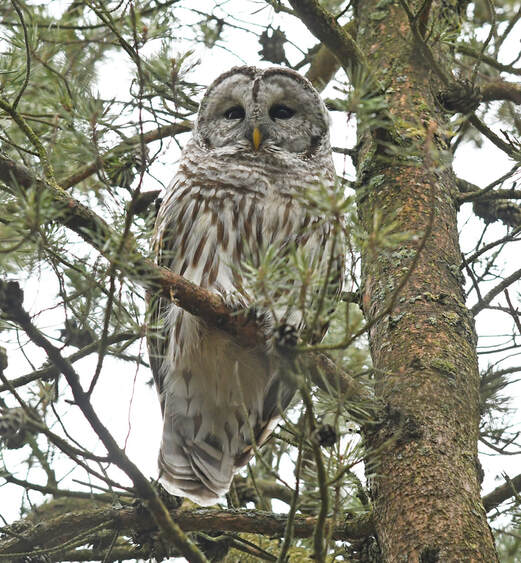
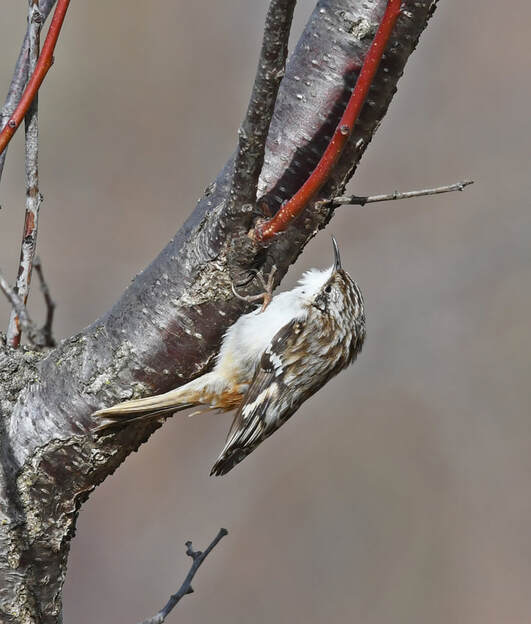
My last post covered some of my mothing excursions from early this spring. I have been getting out during the day as well, and have taken my camera with me some of the time. Below are some of the diurnal spring highlights so far from the second half of March. Laura and I ran a very successful Amherst Island tour on March 18. Of course the owls were the show-stoppers, but we encountered many other species of birds. My eBird checklist for the day tallied nearly 50 species, including some first of year migrants such as Eastern Meadowlarks and Wilson's Snipes. A flyover Red Crossbill in Owl Woods was a rare sighting for the island. The numbers of hawks on the island - Rough-legged Hawks in particular - were particularly astounding. I counted 37 Rough-legged Hawks, meaning that the true number on the island may even be approaching triple digits. Clearly, the Meadow Vole population was experiencing an excellent year. All of the Rough-legged Hawks were a little too far for good photos so this record shot of an attractive dark-morph will have to do. Laura and I had a few other commitments in eastern Ontario but we fit in some birding on our way home. These stunning Evening Grosbeaks provided a nice photoshoot opportunity. It had been several years since I had observed the Greenland subspecies of Common Redpoll (rostrata). This past winter was one of the better redpoll invasions I can remember, and I finally caught up with two Greenland Common Redpolls with Laura at Shirley's Bay, Ottawa. We also scored a Hoary Redpoll and a late Pine Grosbeak, both lifers for Laura! On March 23, the weather conditions looked excellent for a hawk flight and so I ventured over to the Niagara Peninsula Hawkwatch at Beamer Memorial Conservation Area in Grimsby. It was a beautiful sunny day with a light south wind, and the hawks and vultures were certainly on the move. Red-shouldered Hawks put in a good showing with at least 22 passing by during the morning. I lucked out with two nice finds. The first was a Golden Eagle that passed far to the south - a gorgeous adult. The second highlight occurred less than half an hour later. I looked up to see a Black Vulture trying to sneak past with a kettle of Turkey Vultures! I informed the official counters on the tower and we watched the Black Vulture continue on by. Black Vultures are regularly found in the Queenston area along the Niagara River, but they are still a rare sight elsewhere in southern Ontario. Beamer has been getting a couple of Black Vultures each spring in recent years. Early April typically brings migrant Golden-crowned Kinglets and Brown Creepers to southern Ontario. This year they were a week or two early. Here in Niagara, the high-pitched seet calls signalling the return of these 'creeplets' became apparent by March 20 or so. On March 28, I led a tour to look at waterfowl and early spring migrants in the Long Point area. We dodged rain showers for most of the day but still came across many great birds! A long-staying Eurasian Wigeon at the Port Rowan lagoons was a highlight, as were two hybrids - a Redhead x Ring-necked Duck, and an American x Eurasian Wigeon. We cleared 70 bird species when it was all said and done, with other highlights being numerous Horned Grebes, a crisp male Eastern Towhee, and first-of-years such as Blue-winged Teal, Lesser Yellowlegs, Field Sparrow and Eastern Phoebe. A birding day with my dad was in the cards for March 29th. Unfortunately, for the second spring in a row, we would miss out on our May weekend at Point Pelee. At least we were able to meet up for one day of photographing birds. Port Weller was our destination, and a good choice it was. The threat of rain had kept the crowds away, for one. On average I would say that around five times as many people are visiting Port Weller compared to pre-pandemic times. Of course, it is great that people are out enjoying nature, but it also means that a Port Weller hike has a much different vibe these days. A lot of people also do not seem to understand the bylaw prohibiting off-leash dogs, as well. We enjoyed a relatively solitary walk out to the end of the pier and back. Many new migrants were in - mostly creeplets, but a Winter Wren, Brown Thrasher, flyby Red-necked Grebe and 16 Horned Grebes were highlights as well. We tallied 16 species of ducks including singles of Blue-winged Teal, Redhead and Ruddy Duck. In the afternoon we checked out a Great Horned Owl nest near Fonthill that Laura and I had discovered a little while earlier. The two white floofs were out of sight, hidden in the nest by the adult. In no time at all they will outgrow the nest! Despite cool temperatures, a splash of sun instigated a few insects to take to the wing. The genus Pseudexentera includes a number of early-season moths, many which fly during the day. I believe this one is Pseudexentera sepia. These tortricid moths are tiny and easy to miss. Speaking of early-season, day-flying moths, here are a few others that I photographed during a glorious sunny day earlier in the month. Sunny weather on March 30 coincided nicely with another walk to the end of the Port Weller east pier. This Mourning Cloak was extremely wary and a little beat up, but I finally managed a few photos. Eastern Bluebirds are, strangely, difficult to find at Port Weller during migration. In fact, prior to this year I had only observed this species once on the pier. The distinctive calls of an Eastern Bluebird caught my attention, coming from the large grassy knoll south of the big pond. A few seconds later and I had found the culprit, a female Eastern Bluebird. A little while later, a fluttering moth piqued my interest. It was wary but eventually, I tracked it down for photos. It was a very crisp looking Forage Looper, a species that typically does not appear this early in the spring. In fact, I cannot find any other March records for Ontario. Another sign of the premature start to spring in 2021. I will end the post here. Stay tuned for the next one, documenting some of my hikes in early April.
0 Comments
Leave a Reply. |
Archives
February 2026
|
RSS Feed